“May I Please Use the Rest Room?”

“May I please use the rest room?” Oh, the countless times I heard this request as a school teacher in decades gone by. I’m certain I uttered it myself as a student on many occasions, too, my bladder yearning for relief from the building pressure.

One ashen-faced high school student voiced the same request to me one afternoon just before the bell, then proceeded to regurgitate his lunch all over the classroom floor. Unforgettable moments.

We are a delicate society in many respects, I suppose. Most kids my age did not grow up on a farm, so we were unaware of many of nature’s surprises until a late age, e.g. how babies are made, etc. We were taught to keep “private parts” private, and to “do our business” without an audience. Those who did not do so were considered crude and inappropriate, and were often punished for it by parents and school officials.

I’m not sure we are always better off as a society with our niceties; in fact, I could easily make the case (I think) that our ignorance of natural things has often intensified and abetted an unnatural interest in things natural. But . . . that is a separate discussion.

Growing up in my generation the boys were always intrigued and fascinated by the difference between them and the girls. We all wondered what it was like in the girl’s restroom, and in what way it might be different. The mysteries that surrounded sexuality fueled the quest and fanned the flame. On occasion, some boy willing to risk behaving inappropriately would venture into a girl’s bathroom in an attempt to rend the curtain of privacy and mystery. But that was rare.

Kids in school today live in a very different world than the one I just described. One has only to go to the internet to see in HD quality what it looks like for a man and a woman to engage in sexual intercourse. Or to watch two gay men having anal sex. Or to watch two lesbians imitating vaginal intercourse. One can see shemales on the internet. One can watch what used to be called “bestiality,” too.

In fact, on the internet ABSOLUTELY NOTHING is taboo. You can watch people as their throats are cut, and see them as they expire; watch people blown up in explosions and see the aftermath.

The problem now is not the sheltering of children as they mature; rather, the absence of any shelter at all. Presidential candidates insulting one another, insinuating that the size of the others’ penis is small. We certainly aren’t called “the land of the free” for nothing, are we? We have become so free we almost no longer have any constraints at all.

There is no mystery any longer.

There is no surprise.

But instead of experiencing relief due to this knowledge of all things natural, instead of awareness defusing unstable and explosive intrigue, we have exacerbated the problems of maturing, and have created expectations as unlikely as a siting of Sasquatch.

We have learned to prefer the counterfeit to the real; the imaginary to the factual. That is “how we roll,” as we now say. We are taught how life is to be lived by watching any one of a number of countless TV channels, or by streaming video on the internet, not by the wisdom of those in our family who have lived it before us. [I say that, but realize that now we are fast approaching a time when many of those who have gone before us have indeed tried to live life by what they saw on their electronic devices].

But now our issues are more complex than just male and female, boy and girl. Our sexual identities, we are told, can be different from our physically determined genders. So, we might be male physically, but female in our sexual identity. Or we might be female physically, but male in our sexual identity. Or we might be male physically, and male in our sexual identity, but we prefer male sexual relationships. Or we might be female physically, and female in our sexual identity, but we prefer female sexual partners. Or we might be either male or female physically, and male or female in our sexual identity, and prefer both male and female sexual relationships. Or . . . .

Can the list go on, perhaps? I think it can.

You see, things have gotten very complex.

Now, when a student says, “May I please use the rest room?” the teacher can’t really be sure which rest room the student wishes to use. Why does it matter? When I was teaching I was encouraged to be careful not to allow two students in the same bathroom at the same time (to help make sure the bathroom request was legitimate, and not just an effort for two students to skip class together).

Granted, the more crafty boys and girls could ask to use the bathroom around the same time, and thereby create a time to rendezvous as a couple. But now the situation is much more complex. Because the teacher doesn’t know if it’s a boy wanting to go into the same restroom as a girl . . . or a boy wanting to go into the same restroom as another boy . . . or a transgender person wanting . . . .

Does anyone just go to the bathroom anymore? Or does it ALL have a sexual undertone?

I had a psychology teacher in high school who used to begin class by individually asking students, “Who are you?” Once a response was given, he would rapidly ask the same student again, “Who are you?” He would do this several times, undoubtedly in an effort to peal back layers of identity, for no one gave the same answer twice.

Identity is an odd, yet many-splendored thing.

But it must surely be determined before one chooses which bathroom to use.

Or maybe . . . that can be just as changeable as the weather. And why not? Who’s to say it can’t be, or shouldn’t be? Who, indeed?

The United States government is suing the State of North Carolina because it has allegedly violated the U.S. Constitution by discriminating against transgender persons, and North Carolina is suing the U.S. government over the effect of its new and unique interpretation of discrimination with regard to “sex” (i.e. to include chosen sexual identity) and the resulting legal action. This conundrum is a proverbial Gordian Knot.

Corporate business in a number of sectors is taking sides, and the public at large is doing so as well. Our country is splintering.

So, let’s just take the name MEN and WOMEN, or BOYS and GIRLS off the doors of our restrooms. It just doesn’t matter anymore. I came out of a MEN’S bathroom at a coffee shop a couple of weeks ago, only to trade places with a WOMAN. And I have seen MEN coming out of WOMEN’S restrooms at my place of work, too. Maybe we should just make all public restrooms with a single toilet and a lock on the door. Would that take care of the issue?

And, more importantly, all the while we are wrestling over the sociopolitical issues and implications of this dilemma there is a more serious issue facing us, much like the oft mentioned nine-tenths of an iceberg that sits below the surface of the frigid water.

Not only are our CORE VALUES changing as a society (being brought more up-to-date, in the opinion of many), but there is no longer any agreement as to the SOURCE of our core values. It’s as if we’re flying by the seat of our pants . . . and the pant material is getting dangerously thin.

We are flying the massive 747 Airplane of LIFE with a Cessna engine. And friends, I don’t care how plush it is in the passenger area right now – THIS PLANE IS GONNA CRASH!

I was listening to NPR the other day and was struck by a couple of topics that were paramount that day; one will suffice for this blog entry. The discussion was over the rising problem of female sexual assault on college campuses, and the expert being interviewed was harping on the injustice that would be exacted on any perpetrator whose record of college sexual assault was made public. The expert explained that type of “branding” would potentially stick with a student for the rest of his life. And that would be –  unacceptable, of course. No case was made for the victim’s branding, or the injustice done to her.

Has our social focus changed so radically that we are passionately motivated to protect the reputation of those who violate others?

Yes. Such is the measure of our moral resolve these days.
Posted in Family History, Stories, Uncategorized | Tagged , , , , , , , , , , , , , , , , , , , , , , , , , , , , , , , | 5 Comments

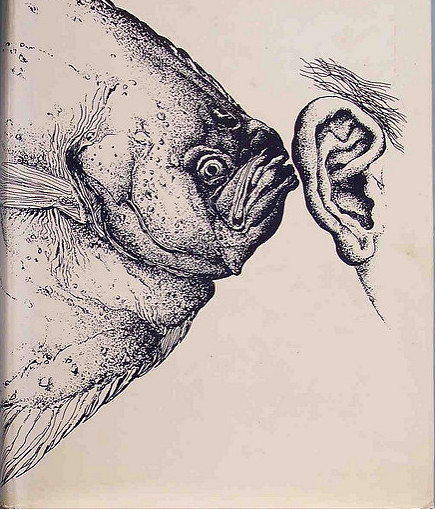
Flounder, anyone?

As a young boy growing up in Chattanooga, I was not particularly fond of fish. My father seemed to be enthralled with eating trout, flounder, and other fish wherein navigating fish bones was an accepted part of the process.

I was not the least bit intrigued with fish bones.

Boneless fish fillets were not as common in the 1950s as they are today. I suppose grocers believed the hungry public to be more robust in those days. I say this tongue-in-cheek, of course (or it could merely be a cantankerous fish bone my tongue is wrestling).

As an adult I have learned to enjoy fish of many kinds: salmon, white perch, swordfish, tuna, sea bass, flounder, mahi mahi, etc., but . . . ALWAYS ones that have had the bones removed. Of course, on occasion you will find a nasty bone or two even in the best of fillets, but thankfully that is the exception.

Flounder is an interesting word, isn’t it?

Some think it is a variation of “founder,” and others find it to be a combination of terms. Of course, flounder is not just about a type of fish. More often than not it is used to refer to a clumsy struggle, a helpless stumbling; faltering, wavering, muddling.

Early roots of the word suggest the flopping about of a fish out-of-water. Truly, that is an apt description of what happens when someone flounders, don’t you think? Picture the scaly creature flailing about, desperately attempting to move in hopes that movement of some kind will bring relief.

I see a great deal of floundering these days. I see floundering in the economic community, floundering in the public governance community, floundering in the social service community, floundering in the academic community, floundering in the religious community, etc.

Political officials are making decisions and establishing laws that are polarizing members of the public. Lines are being drawn, but unlike previous eras when a majority of people seemed to agree on the parameters, there exists now a preponderance of varying points of view, often classified by race, gender, sex, or sexual orientation.

We are losing (or have lost) the cohesive nature of our society. We are coming unglued.

From the Panama Papers to the current candidates for President, from Wall Street to the $15 minimum wage, from the controversy over possible LGBTQ discrimination to the assertion that all citizens have a right to affordable health care . . . our melting pot society is approaching a melting point.

We cannot seem to make up our minds on who we are.

Our diversity (which we often applaud), and our open mindedness (which we laud) have made us something like the chameleon; our colors are changeable at will. We have been taught the mantra of tolerance, inclusion, acceptance and openness. And we have become so proud of our assumed “love” for all things human that we no longer have a way to define right and wrong, good and evil, moral and immoral.

We are like the children in the 1989 movie, “Honey, I Shrunk the Kids,”  hiking in the tall grass and weeds of our own backyard, running for our lives from the small insects that have now been elevated to a position of power heretofore unknown.

Our efforts to follow the new mantra, to embrace the new morality, have weakened the very foundations of our society. And . . . there will be a price. There will be a consequence.

Photo by Chris Drumm

Those who reject Divine Revelation and see all religion as antiquated at best (and downright devilish at worst) are convinced that Mankind itself is fully capable of governing itself, establishing a functional moral code of ethics, and exacting proper punishment on those who do not comply.

And yet . . . in the next breath those very same individuals will observe the governance of our country’s legislators and posit that we obviously don’t have the capability to govern our own selves with any sense of fairness or justice.

Recently the State of South Carolina has come under fire for passing laws that give businesses the right to deny services to persons on the basis of sexual orientation, etc. The uproar this has created in many tech companies across the country is formidable. In fact, some states who are opposed to this legislation have requested that persons intending to visit South Carolina not do so. And businesses (the film industry, and others) are plotting ways to withhold work from this state to punish it and apply economic pressure.

It may just be me, but – it sounds like opponents to South Carolina’s discriminatory decision are requesting that citizens use discrimination against South Carolina to coerce them to comply with them.

Odd, isn’t it?

Unless there is a respected standard of behavior to which citizens adhere there will be no end to the social floundering ahead for us. When each man does “what is right in his own eyes” disaster isn’t far away.

When the Magna Carta was issued in 1215 A.D. the intent was to limit King John’s powers and protect the church and the barons from tyrants. Its influence can be seen in the Constitution of the United States as well as the law codes of various nations. It was preceded, of course, by a number of even more ancient law codes; the concept of laws for the masses is as old as civilization.

But what appears to be happening now in our society is a gradual relaxation of certain laws, specifically laws and customs which govern acceptable social behavior, heretofore thought of as morals.

Morality is approaching a point now where the worst abuse of it is to define it.

We are quickly becoming afraid to pronounce a behavior as “right” or “wrong.” That’s because the only thing we are confident in condemning as WRONG is the audacious and narrow minded remark that something might be “right” or “wrong.”

We are lost in a forest of our own making, surrounded by oaks that tower over us and obfuscate the horizon that could serve to guide us in our journey, oaks that once were small plants, and then saplings.

Unaware of our plight we flail about, positing our political points of view, angered by the narrow mindedness around us, and puzzled that others do not share our point of view which clearly is not only sensible but correct, and humane.

We flounder now. But soon we will lie still. Bones all removed. We are a fillet waiting to be fried to a deep golden brown.

I think we need to refer to the cookbook. Because on our own we are bound for the very demise we so earnestly and passionately seek to avoid.

Some say, “there is no cookbook.” Well, if that is so . . . we must be our own rescuers.

Oh dear!

In that case . . . we are doomed!

Posted in Family History, Fathers, Stories, Uncategorized | Tagged , , , , , , , , , , , , , , , , , , , , , , , , , , , , , , , | 12 Comments

What’s Trump?

When I was a boy we played games in my family; it was one of our main sources of entertainment. My father was eager to teach my brother and I how to play chess, and we actually became pretty good, too. One game in which we included Mother, too, was Rook.

I didn’t know until many years later that we weren’t actually playing Rook, at least not in the strictest sense. My first clue was the fact that we never used the Rook Bird Card when hands were dealt. There are a number of games in the Parker Brothers rules wherein the Rook card is not used; we must have learned one of them, I suppose.

At any rate, bids are made after hands are dealt, and if there are four players you can play with two sets of partners. I actually have a sheet of paper where team mates are listed (my father and brother; mother and me) in pencil, bids are recorded, and final scores. [By the way, mother and I got beaten pretty badly in that particular game, and the scoring is left for all posterity to see].

Players bid based on how many points they think they can score with the hand they are dealt. Once bidding begins players must either exceed the bid of the previous player or “pass.” The highest bidder gets to choose the trump color. Of course, this gives you an advantage if you have lots of cards with that color; no face card is greater than the trump color.

If anyone besides my father won the bid, I remember he would immediately utter the question, “What’s trump?”

Lately, I have been reminded of our family games. If you listen to the news on the radio or watch it on TV or on the internet you have no doubt had the same word in mind that I have had: Trump.

Trump is an electric word, isn’t it? There is no neutrality for hearers of that word, today. Our Rook games at home elicited a similar response: when someone revealed the color of trump there was often a sigh of pain or anguish. Only the highest bidder who named trump rejoiced. And that person was left with the task of making sure they earned a minimum of the points they had bid, otherwise they would experience “setback.”

The question, “What’s trump?” could yield one of four responses: (1) red; (2) green; (3) yellow; (4) black. Responses to the way the word is used today are not so simple, although they are usually quite colorful.

I am not a terribly political person (although some would say I am a terrible political person, if you get my drift), but I find myself asking my Dad’s question these days, i.e. “What’s Trump?”

No one seems to know for certain. But he appears to be the most powerful color in the political deck of cards. Trump trumps every opponent he faces, if not with reason then certainly with bravado.

I do not know who I will vote for in November 2016, although I most certainly will vote. But I hope by that point in time I will have the answer to the question so many are asking, i.e. “What’s Trump?”

And I also hope when a player chooses trump he/she will pick a color I can live with.

Shakespeare said, “All the world’s a stage . . . and all the men and women are merely players.”

I would agree. However, life is a show from which you cannot retire and simply go to your home; it is not mere entertainment. The “players,” both men and women, play for keeps.

Posted in Family History, Fathers, Stories, Uncategorized | Tagged , , , , , , , , | 2 Comments

Leap Year 2016

Well, it sneaked up on me several weeks ago. How about you?

The desk calendar I use for work had a Monday, February 29 on it. And of course, my initial reaction to that is always . . . disbelief. You mean to tell me that four years have already gone by since the last Leap Year?

I suppose so.

I learned the rhyme in school probably 55 years or more ago, and it is stuck in my head as deeply as Columbus and ocean blue: “Thirty days hath September, April, June, and November. All the rest have thirty-one except February, with twenty-eight so fine, and every four years gets one more to make twenty-nine.”

Some think this rhyme dates back to at least the 16th century. It’s a dandy, and I use it all the time, and have done so all my life. Useful stuff, huh?

But I never seem to be able to keep up with the four year anomaly well enough to know when the next one will occur. They sneak up on me every time. I have met a handful of people whose birthday is February 29 (the chance of this happening is 1 in 1500 I have read), so I suppose they might be able to keep track of it better, but . . . I can’t for the life of me figure out how they celebrate the other three years in between their real birthdays!

Leap Year! This is where we try to correlate our Gregorian calendar with the solar calendar. It’s not an exact science of course, but it is an improvement over the old Julian calendar, they say.

It happens that this particular Leap Year will have special significance to me.

Words are “a many splendored thing” (to borrow a phrase from a movie that was popular when I was a senior in high school), they denote, connote, and often come to be representative of quite complex life situations or events.

In 1970 I was a senior in high school in Tucson, Arizona. I had my first real girl friend. My father quit smoking sometime that year. I lost my voice totally with what the gruff ENT doctor said was “acute rhinosinusitis with pharengo laryngotracheitis” (I asked the nurse to write it down for me and I’ve never forgotten it).

It wasn’t technically a “leap year” in 1970, but it was a Leap Year in my life: I was about to embark on my adult journey into life, choosing a direction in college to fashion a career. Lo and behold, Dad decided (after we had long since given up persuading him) that the Surgeon General of the United States and his warnings about cigarette smoking and cancer were to be heeded (although Dad never actually said why he quit, that I recall). Big changes in my life were afoot; that much is clear.

I actually married my wife of now 40 years (come next month) in a Leap Year (1976). And if marriage isn’t a “leap” I don’t know what is!

We speak of “leaps” of faith in life. And we usually are making reference to decisions for which the outcomes are unknown, or shadowy at best. And this year . . . 2016 . . . in a true leap year, I am about to “leap” (stumble, or trip might be more appropriate at this age) into some uncharted life territory. It is veiled in shadow and uncertainty; the unknown.

As many of you know I have held a number of jobs in my life. That’s not how I planned it. But that is how it has been. [See the collection of my wisdom or lack thereof on the subject at http://heartdepot.org/career-junction/]

But the job that has been my mainstay for almost 22 years is about to end in mid-May. It became part-time about 12 years ago (when I thought I was going to go another direction), and I have had to cobble together several jobs at a time to make ends meet, but . . . it has remained my main income and it has been irreplaceable.

Till now, that is.

Because in just 2 1/2 months it will be over. And I will be taking a metaphorical leap, indeed. Well . . . I say “metaphorical.” The leap will be quite real, quite tangible, but the “leaping” metaphor seems to capture the essence. You understand.

Questions abound. Retire early? Draw social security before age 66 and supplement it with one or more part-time jobs? We are praying, deliberating, considering the options at hand, and exploring other job ideas, of course.

But what we will do will become part of our story, and it will be but a page in the saga of our lives. This leap will not define us. Oh, it may set a direction, a course that appears immutable. But that is an illusion. Few things are truly unchangeable.

I struggle over what to decide, of course. Because I don’t want to make a decision that is wrong, or unwise, or less wise than it could be, or . . . . I want to make the perfect choice, arrive at the perfect solution. In short, I want to change the “leap” into a “step.”

But that is not possible with a leap. It is either a leap, or it is not. And a true leap implies risk, possible danger, possible ecstasy, and definite change.

All we have to decide is what to do with time that is given us.”
(Gandalf to Frodo, The Fellowship of the Ring)

There are a great many things in life I do not get to choose: the time and place of my birth, for example. But I do get to decide what to do with the time I am given. And one of those decisions is whether or not to leap.

My father’s leap probably added untold years to his life; he lost something he thought he needed, but . . . he gained something invaluable in its place. The marriage leap I made 40 years ago has brought me love and personal growth beyond my wildest dreams.

I have no reason to expect that this coming LEAP will be any different, do I? In fact, I began this job with a leap, too.

Risk? Resounding Yes!

Uncertainty? Undoubtedly!

“I have had many troubles in my life. But most of them never happened.”
(Mark Twain)

So, bring it on, I say! Come what may. I am lacing up my shoes for the Big Jump, The Leap of faith.

It will be exciting to see where we land.

Photo by Chris Brooks

Photo by Chris Brooks

Posted in Family History, Fathers, Stories, Uncategorized | Tagged , , , , , , , , , , , , , , , , , , , , , , , , | 10 Comments

Statistics: the Truth about US

A number of years ago I was driving down the road listening to the radio when I heard an astounding statement come over the air waves. After thorough research, scientists had concluded that children learn more effectively in smaller classrooms, i.e. in settings where the ratio of students to teachers is smallest.

I wondered if I had missed something. Or if, perhaps, I was so exceptionally brilliant that I already knew this even though no one else did. But then I remembered that my wife (a former school teacher) was one of the first persons I had heard discussing this concept. And then there were countless others who had mentioned it in passing as if it was a known fact. I was just one smart guy in a crowd of smart guys, right?

Astounding, right?

The things we give graduate students to “prove” in their respective theses! And maybe, of course, the point is to teach research skills, not necessarily to evaluate some new concept (especially in master’s level degrees).

Since that day in the car I have been more aware of research comments, statistical insights, and our sometimes blind acceptance of anything boasting high percentages to make a point.

Not that numbers don’t matter. Because they often do.

And not that statistics aren’t helpful. Because they often are.

But statements using statistics can not only be apparent proofs for the things we already know instinctively or from experience; they can also be misleading, agenda-driven, narrow assertions that occlude the truth. And therein lies my concern.

What toothpaste is recommended by the largest percentage of dentists? Which pain reliever is most often prescribed by doctors? Which dog food or cat food satisfies the most pets?

Of course, the marketing and advertising industry has been employing statistics in this fashion for decades. They want to sell products. And they know each of us listening to or watching their ads will be influenced by statistics a minimum of 65% of the time (sorry, I couldn’t resist creating a statistic there).

The “truth” with a capital T on a given subject (we often assume) is necessarily supported by the majority of people who “ought to know” about that given subject. And so those of us who aren’t experts in a given field of study rely on those persons we perceive to be experts in that field. Thus, we buy the aspirin, purchase the toothpaste, take the vitamin, eat the celery, drink the Kool-Aid (so to speak).

But what if the experts polled in a given field, whose opinions are reflected in the statistics of a given ad, are not representative of experts in that field. Or (we shudder to think), what if they are representative, but the majority of experts are ill-informed?

The ramifications are a bit scary, right?

It’s in the details, isn’t it, the proverbial “devil” as well as the facts?

I remember being floored when I heard how books, for instance, make the famed “Best Seller” list. It was when I had finished reading one of the most difficult books ever (The Closing of the American Mind, by Allan Bloom, 1987), and I was marveling that it was on the New York Times Best Seller list. I thought to myself, “A lot of people may have bought this book, but they certainly have not done the arduous (albeit rewarding) work of actually reading it.” Then I mused, “But why would they buy it? Status? Ha!”

No. Books, I came to learn, are put on the Best Seller list because bookstores have been convinced by great book salesmen and marketers to purchase large quantities of the book. The “sales” are sometimes counted over a few select days (the sale of any would-be competing classic literature is not included in this count BTW), and publishers sometimes use the briefly created best seller status to promote the book even further. And you know how we ALL respond to statistics that reflect SUCCESS. We buy more books! No one wants to miss the bandwagon. Right?

Fear of terrorism has been the topic of discussion over the air waves lately; ISIS, and what to do with Syrian refugees has launched us into a debate that includes (but it not limited to) the closing of our borders to Muslims and/or any others who seem to pose a threat.

As a result many have wished to erase the Statue of Liberty’s invitation: “Give me your tired, your poor, your huddled masses yearning to breathe free, the wretched refuse of your teeming shores . . . .” Some wager she no longer wants to lift her lamp “beside the golden door.”

And, of course, the argument to the contrary includes (wouldn’t you know it) . . . statistics. Yes, the percentage of Muslim terrorists in this country who are involved in mass shootings. They say the number is very low.

The same thing happens with black/white racial issues, police brutality, racial profiling and the like. Almost every social argument you hear for or against a thing involves Statistics, Numbers, Percentages, Probabilities.

What is the likelihood that a given individual who enters AA (Alcoholics Anonymous) and gets sober will stay sober? Less than 50%?

What is the likelihood that two persons who marry will stay married? One in two? Or that rainfall will occur on this date in north Georgia? That an individual will be involved in a serious traffic accident before he/she is 30 years old? Or that persons with high fat intake will get cancer?

The percentage of children in the U.S.A. who will be diagnosed with autism by their third birthday? Your chances of being struck by lightning? How often the stock market experiences a downturn after a global catastrophe? Which vacuum is listed as having the fewest number of complaints in Consumer Reports?

We start our day with statistics that inform us about what weather to expect that day, and we dress accordingly. We drive in ours cars with the aid of a GPS device that tells us approximately how many minutes our trip will take given the volume of traffic. We eat a lunch of our choosing based upon how likely we are to suffer a heart attack as a result.

We are an information-driven society enamored with statistics, clamoring for the latest poll numbers, and pillowing our heads at night on a mattress that promises to give at least 20% better rest than its competitors.

Trouble is, not everyone is telling the truth. Or, they may be telling a truth, but not the whole truth. “The truth,” says Obi-Wan Kenobi, “from a certain point of view.” But how aware are we of the point of view that serves as the basis for these multifarious “truths” that guide our actions, purchases, and opinions each and every day?

It has been said that “numbers cannot lie.” They are what they are. Nevertheless, these pure, true numbers can also be used to buttress a point of view that is just plain wrong.

So, where are we left with it all? We are part of a society bent on constant evaluation, where products are constantly shifting in rank due to statistics. There are good statistics, and there are bad statistics. There are statistics that illuminate the truth, and there are statistics that occlude the truth.

We are left to decide which is which.

Rest assured, we will make decisions on how to live and treat others based on what we decide.

And so . . . how will YOU choose?

P.S. An unprecedented 85.2% of persons who read and comment on this blog will have a better life.

Posted in Stories, Uncategorized | Tagged , , , , , , , , , , , , , , , , , , , | 4 Comments

The Lyin’ in Winter

To write or not to write; that is the question. “Whether it is nobler in the mind . . . .”

Okay! I know I am not very original, but there are worse things I could be, right? Besides, Shakespeare doesn’t have a monopoly on that dilemma, and Hamlet won’t mind having his private thoughts quoted.

Winter is here in earnest. Well, as earnest as it gets in this part of Georgia. We toy with winter weather all through November, December, January, February and March. Colder parts of the country scoff at our mild winters, so we have little to say to those folks during these months. When summer comes we will talk nonstop about our heat and humidity.

Until then, we will lay low (as they say), and hope that no ice or snow inundation brings us into the national spotlight, thereby exposing us to ridicule from the Winter Warriors who are accustomed to braving harsh elements unimaginable to us southerners. We don’t like being a laughingstock for the northerners who think of our winter as something approximating their spring.

A New Year has begun, of course.

If you are a resolution maker you have no doubt already formed Your Ten Commandments and subsequently broken at least one of them within the first weeks of the term. Setting goals is difficult enough (for many of us); indefatigably working toward them is on a whole other level.

But one of my goals is to continue to write . . . “in season and out of season” (to borrow a phrase). That is, when I want to and when I don’t.

The Lion in Winter, of course, was a 1966 play written by James Goldman, popularized even more by the 1968 film starring Peter O’Toole and Katherine Hepburn. It is set in 12th century England and chronicles some of the exploits (some fictional, some not) of Henry II.

Among the themes one could use to describe this play the theme of pervasive prevarication is appropriate. Lying.

This is the year for another presidential election in the United States. And so, we have all prepared ourselves to hear a great deal of lying this winter and in the months to come. I’m not sure there is more lying in the months leading up to an election, just that we tend to be more keenly aware of it because potential candidates try to bring it to light.

It is easy to look for inconsistencies in the statements of presidential candidates, even fun to point out possible prevarication. There must be something of the aspiring-word-detective in all of us; we do get a bit of satisfaction from noting the fallacies. We like to think we cannot be fooled, and we like others to think it about us, too.

What we definitively DO NOT like, however, is to closely monitor OUR OWN prevaricating. THAT . . . we will tolerate to no end. We resolve, and then we give up; we set goals, and then we abandon them; we dream dreams, but we never wake up in them.

There is little growth. Little change. Little improvement. Precious little transformation.

We talk. But we do not take ourselves seriously. We do not even listen to what we say.

The very real danger is that we will create a society or a culture where a man or woman’s word is no longer his/her bond, where one cannot be trusted to fulfill his/her obligations, where government can just as easily be expected to cheat or lie as any individual, and where child behavior and education are stymied by the prevailing looseness we endure under the rubric of “freedom.”

I will observe the various presidential candidates as they parade about this year, and I will vote on November 8, 2016, making the most responsible decision I can muster. I hope you will do the same. It makes a great deal of difference in our nation.

But far beyond the importance of the presidential election and the trustworthiness of the candidate who is chosen for that position for the next four years . . . is the surpassing importance of your trustworthiness and mine.

I am, in fact, the most significant force to influence the integrity of my family, those closest to me. And so:

  1. I will take my promises seriously.
  2. I will avoid making glib remarks.
  3. I will admit when I have failed to keep numbers 1 & 2.

No matter how outlandish Donald Trump sounds, no matter how deceptive Hillary Clinton appears, no matter what any persons in high positions espouse, my main focus this winter and in the months to come will be on my own words. My own goals. My own resolutions.

Unlike Henry II.

Unlike anyone around me who is content to live in a world of pretense, and who does all he/she can to create a following, an entourage of the misinformed.

I will write. And I will tell the truth.

Posted in Stories, Uncategorized | Tagged , , , , , , , , , , , , , , , , , , , | 2 Comments

Merry Xmas from Georgia, 2015

Xmas in Georgia 2015

We have been bemoaning our fate these past few days, grumbling over the fact that on Christmas Day the temperature might be 77ºF (a possible new record will be set), and there will likely be thunderstorms. And we’ve been asking odd questions like, “Will we have to run the air conditioner when we bake?” Wasn’t it 28ºF just a few mornings ago, ice covering the roof of our house; there were windshields to scrape. Was I dreaming?

Georgia’s weather is odd on a regular basis. But this . . . is a bit unusual even for us. It reminds me of Tucson, Arizona at Christmas, except this year they will be about 10 degrees colder than Atlanta.

I stepped outside this morning and took a picture of a pink rose bud forming. Nature is pretty savvy most of the time, but it can get thrown for a loop, too, on occasion. This is one of those times.

Topsy turvy.

I think it is safe to say I like things to be predictable. Oh, I love a good surprise as much as the next guy . . . as long as it falls into some pretty sane and predictable boundaries, that is.

But when something gets turned on its head . . . .

When your world is topsy turvy (so to speak), when the element of surprise becomes the norm, and disorder becomes the new order – that does not particularly appeal to me. At least, not without some counseling.

Reflecting on that this morning I was reminded – that is what this season is all about.

No matter your beliefs (or lack of beliefs) on the subject, you must admit that the Christmas story is topsy turvy in nature, anomalous at best. Consider this:

  • A baby (ostensibly illegitimate) born to a young woman in less-than-humble circumstances is actually the savior of the world
  • A small insignificant town is his designated birthplace
  • His arrival is apparent to just a few persons, and they are the social outcasts

The Christmas story is like a rose in winter, or like streams in a desert. It is like the anomalous springtime in Georgia this December, 2015. Odd. Out of place. Nevertheless, from this moment on it will be in the record books.

I always find it interesting when the TV weatherman reveals record temperatures or statistics about other natural phenomena: the Little Ice Age of 1887-1888, the winter of 1935-1936, the flood of my wife’s hometown (Portsmouth, OH) in the winter of 1937. Often severe winters are preceded by an unusually warm winter.

[Ivan Doig’s classic book, Dancing at the Rascal Fair, recounts the plight of immigrants coming to Montana during a record breaking brutal winter; it is well worth the read]

Maybe you’re not curious (or self-absorbed) like me, but I have always been interested in knowing what the weather was like the day I was born. The day I was born the temperature in Chattanooga, TN had a wider range than normal; the low was 28ºF and the high was 66ºF. (I was premature, so I had to live in an incubator for a few days. The weather inside there was pretty consistent as I recall).

Clearly, my premature birth (4 to 7 weeks) was not something my parents had planned. My brother was a January baby, and I guess, had I gestated to term, I might have been one, too. Mother had to leave the hospital without me. Again, not according to plan.

In a very real sense when we celebrate Christmas (or Xmas if you prefer the abbreviated version which uses the first Greek letter χ for the word Christ) we remember, and pay homage to, the unpredictability of our lives. And I do not mean this in a negative sense; rather, the converse.

If you go to a 12 Step meeting like AA (or any number of others) you will eventually hear someone say, “My best plans and intentions got me here.” Or “my best thinking got me here.” It is, of course, an admission that often our attempts to plan, control, navigate, and lord over our lives ends in confusion. Persons are hurt, relationships are damaged, and our vision of how life ought to be just seems to crumble into the proverbial dust, much to our chagrin.

The Christmas story is all about good coming out of apparent ill, great coming out of exceedingly small, inexpressible joy being born from the sad and lowly, the proverbial beauty from ashes.

It went down in the record books, of course, as you know. We date our calendars by it in the Western World. And in a very real sense . . . nothing will ever be the same because of it. Countless persons have experienced life changing events because that baby was born.

Rather than see this year’s weather as an anomaly that feels less than Xmas, or as the result of an El Niño, I can’t help but see it as a reminder that what I can’t predict is often the very thing that saves me, that thwarted plans are very often the opportunity for a better-than-imaginable result to reveal itself.

And no, this is not just wishful thinking, not just the power of positive thinking; rather, it is the humble admission that I am not as powerful as I think I am, that sometimes a rose can bloom in winter, and that when it “rains on my parade” it is not necessarily a bad day.

This Christmas will go down in the record books, record temperatures will be put into computer data bases all across the country. And in the future you will occasionally hear a reference to the oddity of this winter. But this anomalous winter will change very little in our world. We will remark about it this year, and possibly the next, then it will only be referenced in passing.

But the first Christmas . . . . Well, that is another story altogether. Unpredictable. Unprecedented. Unending in its effects.

Posted in Family History, Stories, Uncategorized | Tagged , , , , , , , , , , , , , , , , , | 2 Comments

It Seems to Me . . .

Okay, okay! Bring on the hate mail.

I try very hard not to be offensive to those who are kind enough to read one or more of my blogs, but as comedian Brian Regan says (after making a similar disclaimer): “Here we go.”

We have succeeded in training a whole generation [shall we call this group “millennials”?] to: wear their feelings on their sleeve, be vigilant in watching for subtle racial innuendos, always be on guard for any hint of an ethnic or sexist remark, and react in the extreme when they encounter anything that smacks of exclusivity.

As a result we have women in combat, persons in large corporations promoted to positions beyond their capabilities simply because of their race, unisex bathrooms in some high schools, felons convicted of murder, rape, etc. who feel unfairly treated because they were tried in the adult criminal justice system when they were still just juveniles (allegedly unable to make adult decisions or understand the legal nomenclature of the courtroom), and health insurance companies unable to keep up with the nuances of our redefinitions of human sexuality, gender identification, and the resultant ramifications.

We have created a society whose undercurrent of sensitivity is so vast we scarcely know how to function. We fear litigation at every turn, and so we are first-and-foremost in the business of protecting ourselves against possible objections, even fortuitous ones.

Television shows like The Office make light of our dilemma by showing the office manager (Michael Scott, played by Steve Carell) being anything BUT sensitive as he manages a failing paper company, and sets the tone for the group of misfits in his Scranton office.

Of course, we laugh. Not only because the situations depicted are so uncomfortable, but also because the office misfits are so believable to us. Exaggerated, yes. But close enough to the real thing that we experience identification.

But in our real worlds . . . we no longer know how to laugh about these things.

And so, when a supposed expert was asked (in a recent NPR interview) about the racial discrimination that exists currently even on Ivy League college campuses, he cited as one example (and he said there were more than one hundred) a situation where a college professor is discussing poverty and/or the ghetto, and he automatically looks to the African-American students for personal insights on the subject.

Granted, the chances these students have experienced that to which he refers is very small. But the fact that he seems to look to them reveals his own prejudices and misinformation. If that is all the prejudice and misinformation experienced by students in that classroom in a semester, then I say they are very fortunate.

What is just as likely, however, is that someone reading this blog might criticize me for suggesting the professor is a “he” and not a “she.” That is the extent to which we have become infected by this insistence and obsession on equality.

We have produced a generation of thin-skinned, militaristic, passionately misdirected persons who have embraced a watchword that unifies them: social justice. Of course, in and of itself this theme is admirable. But the proverbial “devil is in the details.”

And now this point of view has spilled over into older generations, too. We are fast becoming a society quick to take offense, our fists poised to fight, guns drawn, feet planted, ready to charge ahead with our sword out of its scabbard. That may seem appropriate in our current terrorist climate, but it is way out of place when the only terror we experience is someone else’s ignorance or lack of understanding.

You will never legislate that out of existence.

When I was in college I was part of a group of students that tried to oust a professor; we had decided he was “too liberal” to be teaching us. He was a fine man. He just had a bit more “open” view of things than a number of us. We decided that the proverbial “tail” ought to be able to “wag the dog.” I no longer recall what happened to him now.

What I do know is that in years to come I far surpassed the liberalism of the ideas he espoused. But in those early years I had put myself in a position to critique and expose someone from whom I should have listened, learned, and considered.

It seems to me that the current social dilemma we are in encourages the ones who ought to be learning to instead be judge and jury for those who ought to be instructing. And in the midst of this upheaval an atmosphere of injustice has been spawned; a doctrine that purports unity, equality, and fairness has instead birthed a bastard whose heart and soul is all about highlighting the differences between races, ethnicities, and genders.

Of course, I am a white, southern born, middle-class male in my sixties. So, my point of view should be discounted, I suppose. But it seems to me we have empowered the bullies, coddled the criminals, and created a society that waves the flag of freedom while simultaneously controlling every move its patrons make.

Well, if you have read this far . . . Thanks! I needed to get that off my chest.

I know there are persons who have been badly hurt in this world, minorities that have experienced painful discrimination I can never hope to comprehend. And our country has made some horrible mistakes in its history, sometimes with full intent. But the way we sometimes seek to heal the wounds is not productive at all.

And I fear the misguided attitudes that power our attempts at social therapy will inadvertently produce citizens who only understand the pronouns “we” and “us” as they are juxtaposed with a “them.”

Posted in Uncategorized | Tagged , , , , , , , , , , , , , , , , , , , , , , , , , , , , , | 16 Comments

Helicopter vs. Free-Range Parenting

I recently listened to a National Public Radio interview where the miseries caused by “helicopter parenting” were enumerated. The discussion featured a prominent scholar/author on the subject, as well as a Kennesaw State University counselor. It was quite interesting.

Evidently, emotional immaturity is on-the-rise on college campuses, and the occurrence of emotional breakdowns over minor challenges and struggles is commonplace.

The culprit?

Helicopter parenting. A term coined in the late 1960s (Haim Ginott, 1969) that has become representative of overprotective, over involved, smothering parents, more recently described as drones.

On the opposite side of the spectrum is what has been called “free-range parenting” (Lenore Skenazy, 2009). This approach encourages children to be age-appropriately-independent, and develop their personal potential in situations that are not risk free. Some have criticized this approach, saying it is simply what used to be called “parenting.”

There has always been disagreement with regard to child parenting and child education methods: too lenient, too disciplined; too amorphous, too structured. And like the pendulum, we tend to vacillate between the extremes, possibly because that makes it easier for us to see the difference between the points being debated.

Some tend to balk at positions that bear too much similarity; they get lost in the minutiae. In addition, many carry the old “if a little is good, more is better” approach, so they are more comfortable migrating toward one extreme or the other. Our sociopolitical postures seem to bear this out as well.

The permissiveness of the 1960s ushered in an approach to living, child rearing, education, religion, etc. that has had half a century to ferment. Dr. Spock notwithstanding, so-called “conservative” approaches to child rearing have remained, but I think it is safe to say that the general tenor of American society (not to mention many other developed societies) still embraces the so-called “freedoms” espoused by the activists of the 1960s; we are the most “tolerant” we have ever been. And some would argue, the most unhappy.

As I listened to the aforementioned interview I was intrigued when the scholar/author denigrated the “helicopter” parents, saying that children must be allowed to interact with one another without parental supervision, thereby helping them to discover on their own how to function as an adult, and gain the strength of character only attained through personal, unaided interaction with the environment.

My mind immediately went back to a book I read in school many years ago: Lord of the Flies (William Golding, 1954), which illustrates what happens when children are allowed to freely arrive at their own rules of behavior when there is no adult supervision. If it is true that Golding’s book was a direct reaction to the 1858 classic, The Coral Island, by R.M. Ballantyne, then it illustrates our current situation precisely, and gives a bit of history to the swinging pendulum of moral sophistication.

My wife and I chose to home school our two children. Now I know that immediately makes us suspect to some readers. Be that as it may, we discovered in our research (prior to embarking on this “risky” endeavor) that parenting methods and influences of the past changed radically when children left life “in the country” where they worked alongside their parents; they exchanged relationships with adults, siblings and neighbors for relationships primarily with friends at school. [See Raising Children for Success, by H. Stephen Glenn, with Jane Nelsen, 1987]

Close relationships between children and parents soon became an anomaly, and the norm was represented by the proverbial rift between the two. Parents would more often than not roll their eyes and say, “Just wait until you have teenagers.” And their children would never dream of sharing their deepest feelings with their parental nemeses; and they do their share of eye-rolling, too.

I tell young parents just the opposite: “Don’t buy into the lie that your children will be your enemies, and that you will lose their love, respect, and intimacy when they reach their teen years.” It is simply not true.

But, of course, that depends, in part, on how you approach your parenting. Smothering can foment rebellion, but unbridled freedom can do the same.

We may be at a point in our society where we are approaching “the perfect storm.” Our worship of “tolerance” has all but caused us to lose our identity as a society. Somehow many have come up with the notion that we are becoming more and more civilized with each generation, and that we are on a path toward equality and social awareness. We fancy ourselves defenders of the less fortunate and the downtrodden, and we applaud those who propound extremist views and aberrant ideologies (unless they are terrorists – we are not that open minded).

Paranoia has a strangle hold on us, and every hint of racial injustice that is communicated through the plethora of social media outlets exacerbates it. Difficult times are ahead, and our children may not be up to the task that awaits them.

Granted, I am no expert on education or child rearing. I taught high school (and some junior high school) for 10 years in Tennessee; my wife taught about the same length of time in Ohio and Tennessee. We raised two children and we were, at times, overprotective – especially as compared with the rearing of some of their contemporaries. There is no perfect balance, at least not one that is attainable.

But perfection is hardly the point. Both extremes appear wrong: helicoptering and free-ranging. But there is a far more important question that must be answered. For the truth is that each set of parents will lean toward one extreme or the other. And both can train children who are successful people in our society, able to contribute valiantly in the trying times ahead.

The real question is whether or not parents will embrace the responsibility to invest in their children (no matter the style), guide them, and nurture them, or whether they will assume that the children can raise themselves either by individual personal direction or in the crucible of their herd.

When I was 10 years old my father decided that my older brother and I should “have it out,” i.e. fight. This was his attempt (I believe) to settle a score he never got to settle with his own older brother. Trouble is, my brother is almost 3 years older than me, and he easily beat me up. Undoubtedly, my father envisioned it going another way, but it was his attempt to bow out of the fracas he typically had with my brother, and allow me to defend myself (on his behalf). I lost miserably.

Some might suggest I learned something important in that bout, but I think I just got a bloody nose and avoided my brother’s fists. Actually, I already knew about the latter danger, so that lesson was somewhat redundant.

In certain segments of our current society it appears we have embraced the notion that children can raise themselves, and we are experiencing the detrimental effects of that ideology.

Children learn how to be adults by modeling their adult model’s behavior, not by modeling the behaviors and attitudes of other children who are as clueless as they are about what this thing called “life” is all about. Parents must gladly embrace this modeling role and bring their children alongside them in a variety of situations so that when they are absent the child will know how to interact with others.

My hope is that we rethink the notion that children are best raised when they raise themselves, and rethink it quickly. To do so will require that we go against the grain of popular thought and cutting-edge educational theory. It will require a metamorphosis of sorts.

To refuse this change will result in something more Kafkaesque than we can imagine.

Posted in Stories, Uncategorized | Tagged , , , , , , , , , , , , , , , , , , , , , , , , , , , , , , , , , , , | 4 Comments

Ganesh in Georgia

Ganesh is the Hindu god responsible for controlling life obstacles and providing wisdom. His image, popular and unmistakable, is characterized by the head of an elephant.

The annual celebration, featuring brightly colored figurines of this god (ranging in size from mere inches to 70 feet in height), can be seen all over the world, generally falling in the time period between August and September.

Near the conclusion of the festivities the figurines are immersed in water. Many years ago they were made of clay, and the materials the idol was made of returned to earth without damaging the environment; however, that is no longer usually the case (they are often made of plaster now).

I was a witness to the vast number of people who turned out for this year’s celebration on the Georgia coast, faces painted with red, large groups of men carrying massive idols on bases, making their way through the sand and headed toward a predetermined spot on South Tybee Island. Throngs of men, women, children; families dressed in a variety of colors, pouring their way toward a spot of worship. There were literally hundreds who passed the house where we were.

We had planned to have a family portrait taken out by the shoreline, and it just so happened the place the crowd was headed was exactly where we had planned to shoot the picture. Oh well, we laughed . . . and adjusted our plans; we could find an alternate spot.

We could have no inkling of what was in store that evening, Sunday, September 27, 2015.

We made our way to the edge of the rising tide, north and east of the large throng of people who had gathered. We had to be photogenic quickly, because the tide was moving in, encroaching on about three feet of shoreline with each wash of the waves. My four-year-old grandson was in and out of the water, but managed some great pictures. My almost-one-year-old granddaughter stayed in her father’s arms; the rest of us did our best to look good, but the strong wind was wreaking havoc on our adult coiffures.

After having to relocate the tripod and other photographic paraphernalia several times to avoid the rising tide . . . we were finally done. But as we milled about, enjoying the last bits of evening before returning indoors, the intoxicating cadence of the waves was interrupted by sirens. Soon lifeguards zoomed past with vehicle light bars lit, heading for the spot where the Hindu ceremony was being held.

In just moments two vehicles returned the way they had come; we saw two lifeless men in the back (one in each vehicle) with lifeguards performing CPR as they sped past us. Police began to appear, and soon the Coast Guard employed a rescue helicopter to search for what was clearly a missing person or persons in the water. Rescue efforts were being made with the use of kayaks and and jet skis as well.

We were witnessing the truth of the South Tybee warnings about rip currents in that exact area. It appears that five persons had been swept away in the channel between the shore and the sandbar near Little Tybee. Four were taken to the hospital, two survived. A fifth was missing, and the search continued until just after 10:00 AM on Tuesday, Sept. 29, when the body was found. The deceased Indian men were ages 36, 39, and 41 according to news reports.

Water weighs 65 pounds per cubic foot, a sizable amount. And a rip current utilizes that weight to move objects even in shallow water. You cannot defeat it; rather, you must swim with it or allow it to take you out away from the shore until it releases you. Calmness is important in this scenario, but I am not sure I would be up to it, personally.

In 2013 there were 17 who were swept away in the Yamuna river in New Delhi as they celebrated this same event on Indian soil. What a tragedy.

I have an iPhone picture of the Hindu men unloading two large idols of the elephant god off a red truck and trailer just below the house where we were staying. We watched as they struggled to lift the objects of devotion and maneuvered their way up, then down the wooden boardwalk and across the sand, preceded and followed by throngs of worshipers.

Ganesh Mahotsav 2015

Ganesh Mahotsav 2015

There was a festive spirit in the air, a contagious joy. Nothing could have prepared them for the darkness that was coming.

Life is precious.

As my son-in-law said to me later that evening, human beings are unbelievably resilient and amazingly fragile at the same time. How true that is.

Our devastation that night was like a pall cast over us. Of course, nothing to compare with the families of those lost that day. But that is their story. We were left with our own story.

And our story moved on the next day to: watching a man right beside us catch a small shark (about 4 feet long) with a fishing rod, bring it up in a fishing net, and release it from the pier; an interesting, interactive, kid-friendly, sea life museum; the wonderful Georgia State Railroad Museum in downtown Savannah; Chik-fil-a lunch-on-the-run; and then a longer-than-necessary ride back home (that story is for another time).

We are tired from our weekend trip, but back home. Nothing earth-shattering has been altered in our lives. I cannot say that for the families of the victims of that accident on South Tybee Island. We may all remember September 2015 at Tybee Island. But not with the same intensity.

Nevertheless, I am left with a feeling . . . one that remains quite deep in me . . . a realization that my life intersected with the lives of persons I may never meet again, in a place I may never see again; the intersection was brief . . . but monumental.

My wife said she saw a young boy, about ten years old, with tears in his eyes, and his father asked him what was wrong. He said, “Are they gonna be all right?” His father responded, “You don’t have to cry. They’re all going to be all right. But that’s why I don’t want you going out too deep into the water . . . .”

They were not all right, of course.

Each of us has an “end” to face. For some it may come in their sleep and without pain. For others it may come at the conclusion of a long, pain-filled bout with some disease. Still others may come to a sudden, dramatic, tragic end. But rest assured – there will be an end.

One day some blogger may sit and write about my final moments. He or she may say, “I didn’t know him, but it was a terrible . . . .” Or they just might write about you.

No matter. The intersections will occur again and again. Persons unknown to you will be present right along with family when you pass, most likely. The intersection will happen. Some will notice it. Others may not.

I choose to notice it. I cannot escape it.

Posted in Family History, Stories, Uncategorized | Tagged , , , , , , , , , , , , , , , , , , , , , | 2 Comments